
Barcelona
Just under one visitor in five does not go to the Sagrada Família
80.6 % of Barcelona's visitors reach the Sagrada Família, according to the city's own survey. The other 19.4 % is a lot of people, and nothing bad happens to them.
19.4 %.
Barcelona’s tourism observatory asks visitors which parts of the city they reached. In its 2025 survey the Sagrada Família came out at 80.6 %, the highest of anything measured. Which means that in a survey of a couple of thousand people, roughly one in five had been to Barcelona and had not gone.
That is the whole point of this page. Skipping it is not a stunt, it is what a fifth of visitors already do, usually for one of four reasons: the slots were gone, the family is five people and the total is a real number, they have been before, or they have no interest in going inside a church and are not going to pretend otherwise.
What you are actually giving up
Be clear about it, because the answer is not “nothing”.
You give up the largest single object in the city and an interior that does something no photograph transmits — the whole inside is a coloured light effect that changes through the day, and people who expected to be unimpressed frequently are not. That is a real loss and no other building in Barcelona replaces it.
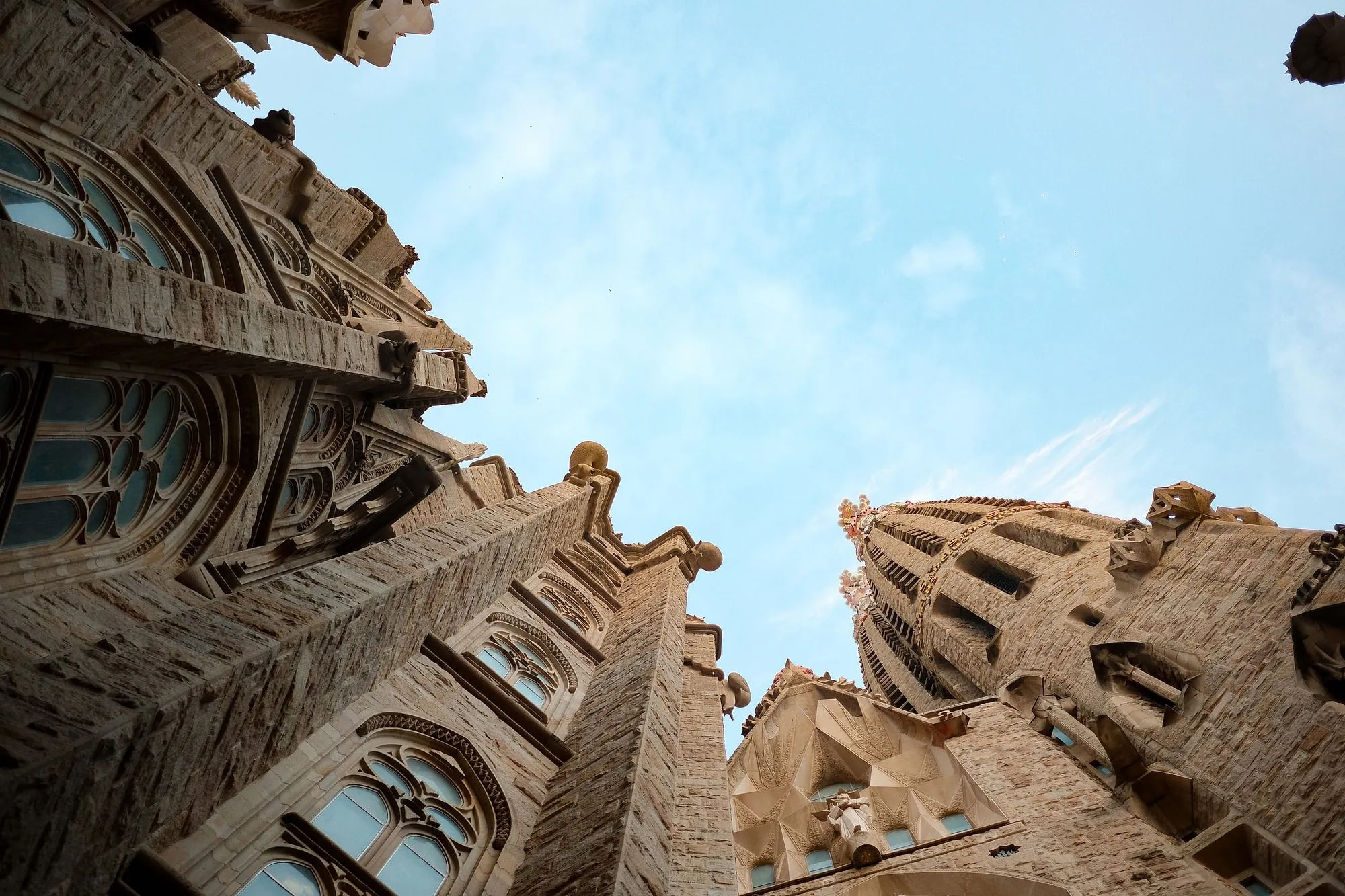
You do not give up the outside. The exterior is free, permanent and visible from three streets, and the two carved façades were made about a century apart by different hands in styles that flatly disagree with each other. Most of what people discuss afterwards is on the outside.
The trip, built the other way
The Eixample on foot. Passeig de Gràcia’s façades are free from the pavement, and the grid itself — with the cut-off corner on every block — is a nineteenth-century idea you can watch working at any junction. This is the densest concentration of modernista architecture anywhere and none of it requires a ticket to look at.
The old city, twice. Once in the morning when it belongs to the people who work there, once after ten at night when the coaches have gone and the streets go back to their real width. The arched bridge on carrer del Bisbe that everyone photographs as medieval was built in 1928, to a design by Joan Rubió i Bellver commissioned by the Diputació de Barcelona while the quarter was being remodelled for the 1929 Exposition, and knowing that changes the whole neighbourhood. Both versions are free.
Montjuïc. Reached by 55.3 % of visitors and worth a whole afternoon: a castle that bombarded its own city in 1842, 1843 and 1856, the 1929 Exposition buildings, and the Fossar de la Pedrera, a worked-out quarry used as a common grave until 1979. Lluís Companys was shot in the castle moat on 15 October 1940 and has lain in the Fossar since 1985.
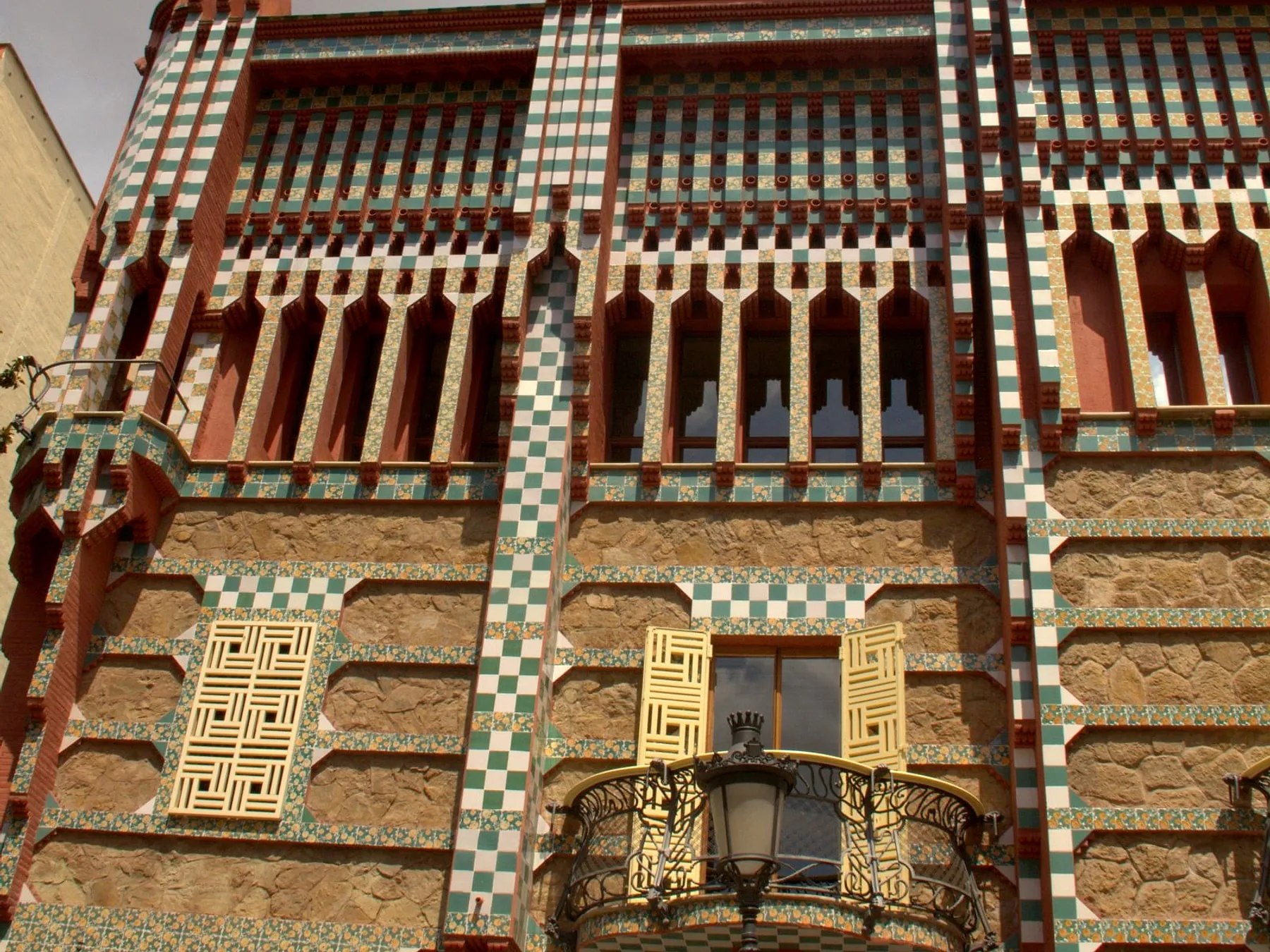
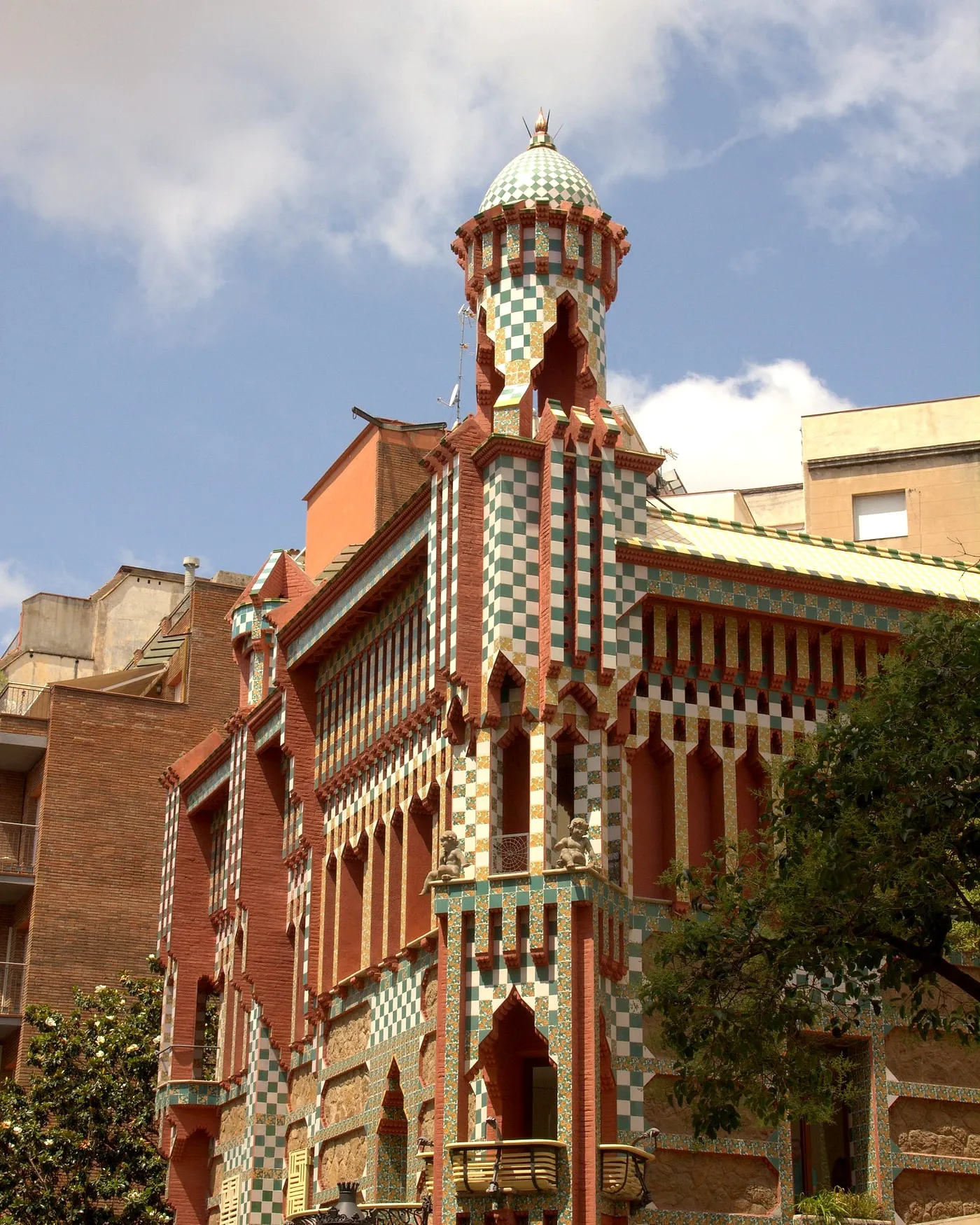
Casa Vicens. Gaudí’s first house, in Gràcia, away from the Passeig de Gràcia crowds. 262,600 people visited it in 2024 according to the house’s own press release, up 31 % on the year before — busy by its own standards and quiet by the standards of the famous ones. It is the building where you can see him deciding what he was going to be. The honest assessment, including who should skip it, is in is Casa Vicens worth it.
Gràcia. The neighbourhood the observatory does not even measure as a visited area, ten minutes uphill from the street every visitor walks down. Squares, a surviving factory chimney, and vermouth from a barrel on Sunday mornings. Start at what to see in Gràcia.
The seafront. Reached by three quarters of all visitors and skipped by almost every itinerary that calls itself cultural.
The one people reach for first as a replacement is Park Güell, and it is the one we would think hardest about: it is uphill, it has its own timed ticket, and half of Barcelona’s visitors skip it. The case for and against is in is Park Güell overrated.
The version where you get the basilica back for free
There is a middle option that people planning around a missing ticket often do not think of: go and stand in front of it anyway, with someone explaining what you are looking at.
That is what our Gaudí walk is. Ninety minutes, entirely on the pavement, around the three façades, with the man himself played by an actor. It needs no basilica ticket because it never goes in — which started as a limitation and turns out to be the reason it works for anyone whose dates are sold out.
We are not pretending it is the same as going inside. It is not. It is the part you can still have.
If you are dropping it to save money
Worth knowing what a Barcelona trip actually costs, since the city measures that too. The average visitor spends 409.47 € per person over the whole stay, of which 86.58 € is the entire entertainment and culture budget — one basilica ticket for a family is a visible fraction of that. Add that the municipal tourist surcharge rose on 1 April 2026 and is legislated to keep rising annually to 2029, and that 41.1 % of visitors already say the city is expensive for what it gives them.
Dropping one ticket to keep three days of walking is a defensible piece of arithmetic, not a compromise. Where the rest of the days go is set out in three days in Barcelona.
And if you are dropping the ticket but not the building, the outside is free and there is an order to walk it in: how to look at the Sagrada Família from the street. The case for not liking it at all, made by somebody better at it than us, is in George Orwell thought the anarchists should have blown it up.
Two more doors for a trip built this way. Palau Güell, in the old city, is the only completed Gaudí home still in its original design and the one nobody queues for. And if you would rather spend nothing at all, the third version of Gaudí in one day is a full day on public streets with no ticket in it.
Where this comes from
- Informe de resultats: perfil i hàbits dels turistes a Barcelona ciutat 2025 (PDF, table on p. 73)Observatori del Turisme a BarcelonaThe 80.6 % who reach the Sagrada Família — the highest figure in the survey — and the absence of Gràcia from the list of measured areas.
Everything above that carries a date, a figure or a name is checked against these before it is published. Where we could not find a source, the page says so.
Quick answers
- Is Barcelona worth visiting without the Sagrada Família?
- Yes, and the city's own numbers say roughly a fifth of visitors already do exactly that. What you lose is the single largest object in Barcelona and one genuinely extraordinary interior. What you get back is the money, the deadline and half a morning, and a trip that is no longer organised around one appointment.
- Can I see the Sagrada Família without a ticket?
- You can see all of it from the outside, from the street, for nothing. Two of its façades are carved a century apart in styles that argue with each other, and comparing them is most of what people talk about afterwards. What you cannot see without going in is the interior, which is a light effect and is the part that surprises people.
- What if the Sagrada Família is sold out for my dates?
- Check the official site again closer to the day rather than buying from a reseller, because slots do move. If it stays full, the exterior is free and the rest of this page is your trip. Do not build the trip around a ticket you do not have.
- Which Gaudí buildings can you see without paying?
- The exteriors of all of them. Casa Batlló and La Pedrera on Passeig de Gràcia, the Sagrada Família from three sides, Casa Vicens from its street corner in Gràcia, the gates of the Güell pavilions, and a good part of Park Güell that lies outside the ticketed area. Only the interiors are paid.
- Is Park Güell a good substitute for the Sagrada Família?
- It is not a substitute, it is a different kind of thing — outdoors, spread out, and about half of Barcelona's visitors go to it. If you are dropping the basilica to avoid queues and timed entries, note that the ticketed part of Park Güell has both.
The tours this piece is about
Gaudí comes alive
You will recognise the guide because he will be Antoni Gaudí.
- How long it lasts
- 1 h 30
- Runs in
- EN · ES · CA
- Price
- 30 €
Never more than 15 people
Gràcia: the town that rang the bell
A bell, a bombardment, and a vermouth at the end of it.
- How long it lasts
- 3 h
- Runs in
- EN · ES
- Price
- 36 €
Never more than 10 people
More in the journal
Gaudí and Modernisme
- Is Park Güell overrated? The case against it, made properly first
- Part of Park Güell is free, and nobody will tell you where the line is
- Park Güell was a housing estate for sixty families. Two plots sold.
- Every Gaudí building in Barcelona, and which ones are free
- One day of Gaudí is two timed tickets at opposite ends of a city, unless you plan it backwards
- Casa Batlló or La Pedrera: one is a refit, the other is a building