
Gothic Quarter
El Call: four streets, a stone that is a copy, and an argument about one building
Barcelona's Jewish quarter takes fifteen minutes to walk and most of what you will be told about it is contested. Here is the part that is not.
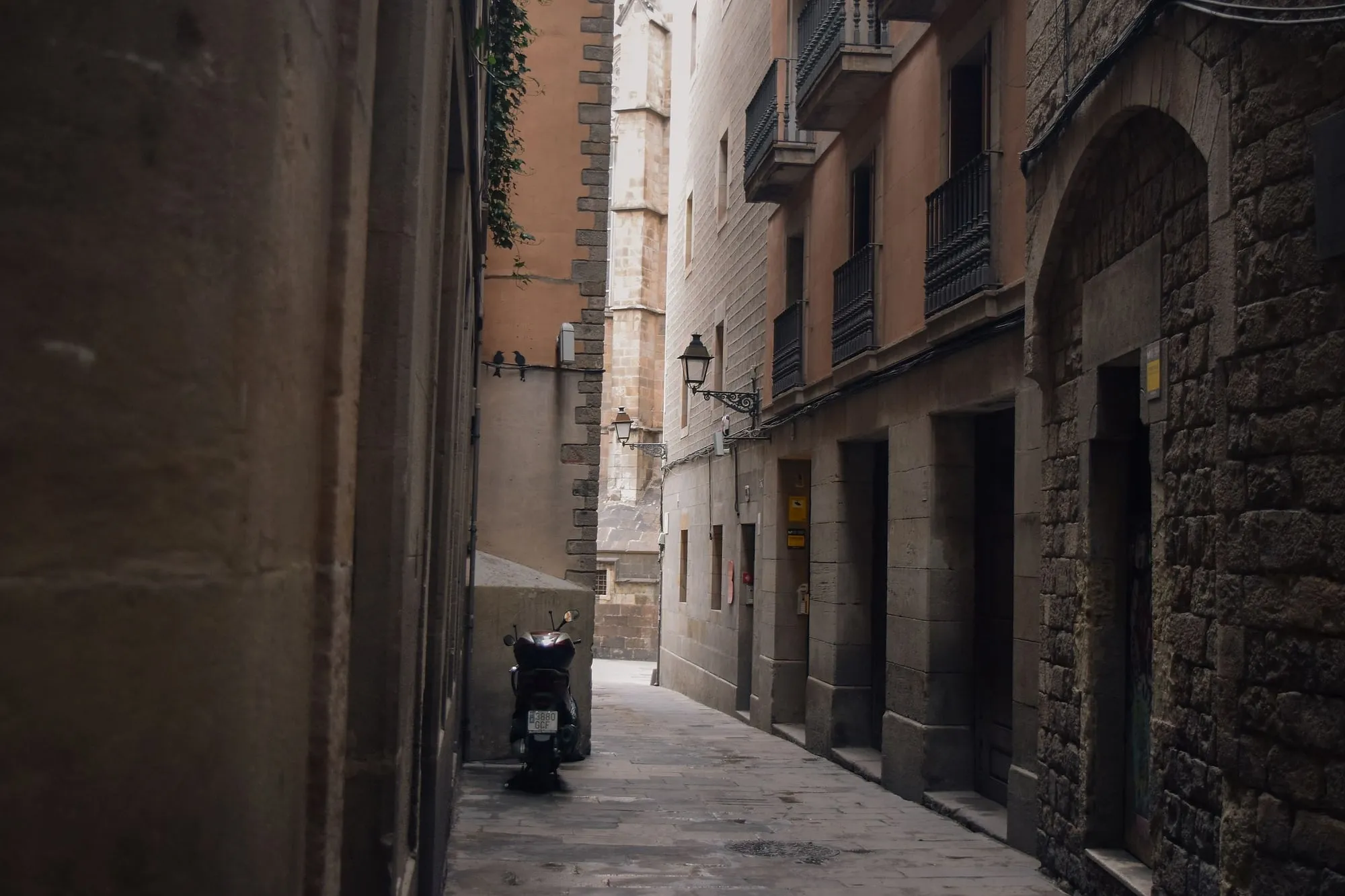
The Barcelona History Museum opens its own route through El Call by warning you that practically nothing of the old Jewish quarter has survived.
That is an unusual thing for a museum to lead with, and it is the right way in. This is not a place you go to look at buildings. It is four narrow streets where you find out what was here, and what was done about it.
Where it was
The Call occupied the north-western quarter of the old Roman street grid — the ground between what are now Carrer del Bisbe, Plaça de Sant Jaume, Carrer del Call, Carrer dels Banys Nous and Baixada de Santa Eulàlia, with the Roman wall along one side.
The museum adds a caveat worth carrying around: in the outer streets the boundaries were never entirely precise, and Jews and Christians lived alongside each other there. A wall around a community is a tidy image and the reality was blurrier.
Jewish presence in Barcelona is documented from the 870s. The quarter as such forms at the end of the eleventh century, and a planned extension — the Call Menor, five blocks with its own synagogue and square — was added in the thirteenth. By the middle of that century the king had authorised gates and windows to be opened through the Roman wall, and the quarter grew past its own edge.
The stone on Carrer de Marlet
The single most-photographed object in these streets is a slab of Hebrew inscription set into the wall at Marlet 1.
It is a copy. The museum says so directly and holds the original.
The medieval text is short: it records the pious foundation of Rabbi Samuel ha-Sardí, a leading figure of the quarter in the mid-thirteenth century, and a lamp that burns permanently.
There are in fact three plaques on that façade — the ancient one, a nineteenth-century one and a modern one — and the museum specifically warns that the nineteenth-century plaque carries an incorrect translation. Which means that a good proportion of what visitors read aloud to each other on that corner, and what gets repeated on tours, is a Victorian mistake.
It is free, it is visible from the street at any hour, and it is worth two minutes precisely because of all that.
The street that changed its name in 2018
The main street of the quarter was Carrer de Sant Domènec del Call for centuries — named after St Dominic’s day.
St Dominic’s day is 5 August. The assault on the Call began on 5 August 1391.
In 2018 the Ciutat Vella district approved renaming it Carrer de Salomó ben Adret, after the rabbi and jurist. The signs say the new name; a lot of maps, guidebooks and tour scripts still say the old one. If you are looking for one and finding the other, that is why.
August 1391
The Call was assaulted on 5 and 7 August 1391. The Barcelona History Museum’s own figure is that around three hundred people were killed. Others were forcibly baptised and others fled. Property was attacked, and not only Jewish property — the bailiff’s house was assaulted too.
We give that number the way the museum gives it: an approximation, in an institution’s own words, without a source attached. It is not a count and nobody should present it as one.
There had been an earlier attack during the Black Death, on 17 May 1348. And in 1263 the Barcelona Disputation was held before the king, between Nahmanides and the friar Pau Cristià; its consequences were censorship, the burning of Hebrew books and Nahmanides’ exile.
After 1391 the king tried to restore a quarter in the area of the Call Menor and failed. In 1401 he issued a privilege by which Barcelona would not come to have a Jewish quarter again.
That is the end of it, and it is why there is so little to look at. The absence is not neglect. It was a decision, written down.
What happened to the buildings, and to the cemetery
The eastern part of the ground was built over from the early fifteenth century onwards by the Palau de la Generalitat. In the mid-nineteenth century the cutting of Carrer de Ferran went through the heart of the former Call Menor.
And the cemetery — the Jewish burial ground on the slope of Montjuïc, documented from 1091 and in use for centuries — passed to the crown in 1391 and was sold in 1393 to a company of creditors, who began breaking it up and using the gravestones as building material for new buildings in the city.
You will be told you can see those stones embedded in named palaces and in the city walls. We could not find an institution that says so, so we are not going to repeat it. Where you can see them, documented, is on the staircase of the museum’s own site in the Call, which displays tombstones from the Montjuïc burial ground.
That hill is named after that cemetery. We used to write that the question was open between mount of the Jews and the Latin Mons Iovis; the Generalitat’s listing decree says the burial ground dóna nom a la muntanya, and the Gran Enciclopèdia Catalana points out that the documents preserved from 878 call the hill invariably Mons Judaicus. The correction, the two excavation campaigns and where the gravestones ended up are in the Jewish necropolis of Montjuïc.
The building people argue about
There is a site in these streets presented to visitors as the Great Synagogue of Barcelona, and described as one of the oldest synagogues in Europe.
Here is the state of the evidence, which is more interesting than either a yes or a no.
The city history museum places the Great Synagogue in the block bounded by Marlet, the street now called Salomó ben Adret, the Arc de Sant Ramon del Call and the Placeta de Manuel Ribé. It does not identify a visitable building, and it does not use the phrase oldest in Europe anywhere.
A documentary study commissioned by the museum and published in 2002 states that its findings contradict the hypothesis locating the synagogue on that particular plot, and concludes that the question can only be settled by extending the research to the neighbouring numbers. The historian who wrote the museum’s own guide to the Call has argued in the press that the building in question was a private house.
The scholar who originally proposed the identification has defended it in print and has not withdrawn it.
So: an open question among historians, with the museum declining to endorse the popular version. We are not telling you where to go or what to buy. We are telling you that if a guide states this one flatly, in either direction, they have decided something the specialists have not — and on this subject, of all subjects, that is worth knowing.
What is actually there to see, free
Fifteen minutes, no tickets:
- Carrer del Call — traces of the Roman wall, including at the corner with the renamed street.
- Carrer de Marlet — the copied inscription and its three plaques.
- Carrer de l’Arc de Sant Ramon del Call — it follows the inner line of the Roman wall, which is why it zigzags; the houses are built against it.
- Placeta de Manuel Ribé — a modern square, and on its corner the museum’s own site in the Call, in a building whose owner immediately before 1391 is documented: Jucef Bonhiac, apparently a weaver of veils.
- Els Quatre Cantons del Call — the crossing where the Banys Nous stood, founded in 1160 by a Jew, Abraham Bonastruc, in association with the count, and in use until the sixteenth century. The street register dates the contract to the same year and says the baths subsisted until 1716 — one of the few names in this quarter that is not a trade.
- The church of Sant Jaume on Carrer de Ferran, which is a former synagogue.
How to be here
It is a residential street the width of a corridor with people living above it, and it is where three hundred people were killed in two days in 1391.
Quiet voices, no blocking of doorways, and if you photograph the stone at Marlet, photograph the stone.
Where this sits in a visit
It is stop four on what to see in the Gothic Quarter, and it is genuinely better after dark, when the streets are empty and there is nothing to look at but the shape of them — see the Gothic Quarter at night.
Our Gothic Quarter walk and its night version both go through here. They tell it the way this page does: what is documented, who documents it, and where the argument is still open. That is a slower way of guiding and it is the only one that survives a reader who checks.
The wider question of how much of this neighbourhood is what it appears to be runs through the buildings that were moved and the Roman city underneath.
The square at the eastern edge of the Call, where the sacramental wills of Barcelona are still sworn on one specific altar, is in the squares of the Gothic Quarter.
Where this comes from
- Itinerari pel Call Jueu de Barcelona (PDF)Ajuntament de Barcelona · MUHBAThe assault on the Call on 5 and 7 August 1391 and the roughly three hundred killed; the Marlet inscription with its nineteenth-century mistranslation beside it; and the museum's own siting of the Great Synagogue inside a block, with three doors, naming no visitable building — and never using the phrase «one of the oldest in Europe».
Everything above that carries a date, a figure or a name is checked against these before it is published. Where we could not find a source, the page says so.
Quick answers
- What is El Call in Barcelona?
- The medieval Jewish quarter, in the north-western corner of the old Roman street grid, roughly bounded today by Carrer del Bisbe, Plaça de Sant Jaume, Carrer del Call, Carrer dels Banys Nous and Baixada de Santa Eulàlia. The Barcelona History Museum notes that the edges were never exactly precise, and that in the outer streets Jews and Christians lived side by side.
- What happened to the Jewish quarter of Barcelona?
- It was assaulted on 5 and 7 August 1391. The city museum's figure is around three hundred people killed; others were forcibly baptised and others fled. The quarter was never re-established, and in 1401 the king granted Barcelona a privilege that it would not have a Jewish quarter again.
- Is the Hebrew stone on Carrer de Marlet the original?
- No. The museum states plainly that the tablet on the wall today is a copy and that it holds the original. It also warns that a nineteenth-century plaque set beside it carries an incorrect translation. The medieval text records a charitable foundation by Rabbi Samuel ha-Sardí and a lamp that burns permanently.
- Why did Carrer de Sant Domènec del Call change its name?
- Because the street was named after St Dominic's day, which is the day the assault on the quarter began in 1391. In 2018 the Ciutat Vella district approved renaming it Carrer de Salomó ben Adret, after the rabbi and jurist. Street signs and maps disagree about this depending on how old they are.
- Is there much to see in El Call?
- Honestly, not much, and the museum says so first: almost nothing of the medieval quarter survives above ground. What there is takes about fifteen minutes and is mostly a matter of knowing what you are standing on. It is the least photogenic and one of the more affecting parts of the old city.
The tours this piece is about
The Gothic Quarter: a neighbourhood that invented itself
Barcelona's most photographed bridge dates from 1928.
- How long it lasts
- 2 h
- Runs in
- EN · ES · CA
- Price
- 15 €
Never more than 20 people
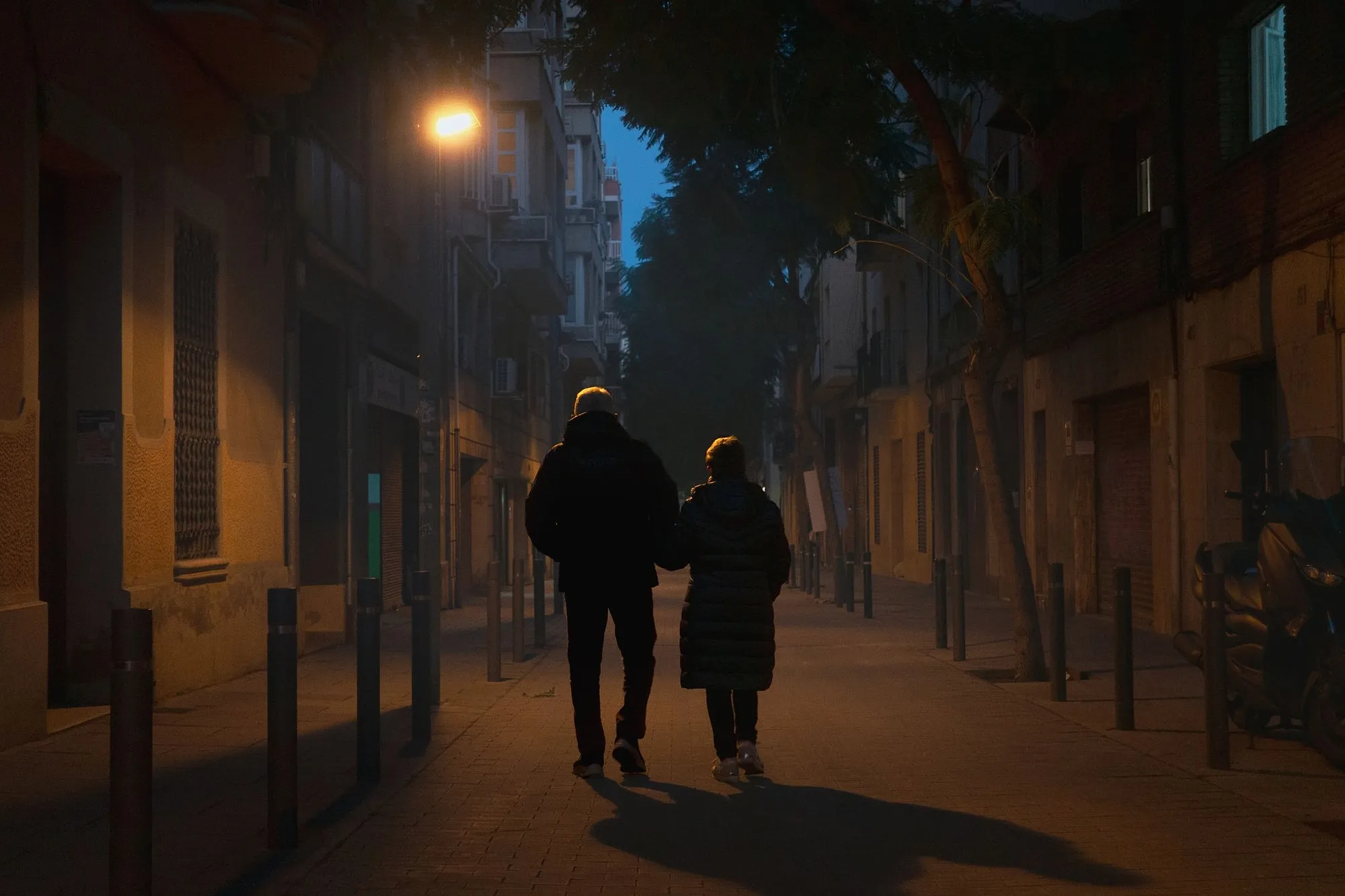
The Gothic Quarter after dark
By day it is a crowded stage set. By night it is a narrow city.
- How long it lasts
- 2 h
- Runs in
- EN · ES · CA
- Price
- 18 €
Never more than 20 people
More in the journal
The Gothic Quarter
- Asked which visitors they would like more of, Barcelona picked the ones who come to learn something
- It was a watercourse with a city wall on one side and convents on the other
- The city counted 1,322 shelters, and says the people dug most of them themselves
- Barcelona has the first documented giant in Europe, and almost everything that walks today was carved after 1987
- The square is called Royal because of a monument that was never put up
- The engineer everyone credits with the Barceloneta designed a neighbourhood that was never built