
Gràcia
Mercat de la Llibertat: the iron hall a town built for itself, nine years before it stopped being a town
Everybody walks through it and almost nobody looks up. A covered iron market opened in 1888 by a town that was about to stop being a town, still doing the job it was built for — and an argument about who designed it that four institutions cannot agree on.
There is a moment on any walk through Gràcia when somebody cuts through the covered market to get to the other side, and does not look up.
Look up. The roof is iron, the tiles at the edge of it are glazed black and red, and there is a wrought shield on the front of the building made of shapes that no shield has any business being. It opened in 1888, and the body that commissioned it was not Barcelona.
A town buying itself a market
The city’s own record is specific about the sequence, and the sequence is the story.
The land belonged to a landowner called Marc Olives, who in 1831 arranged for houses and a wide open square to be built on it. Farmers turned up to sell in the square more or less immediately — the encyclopedia records the plaça de la Llibertat as the site of Gràcia’s first market, back when Gràcia was farmland with a road through it.
Fifty-seven years later the town put a roof on it. The building that opened in 1888 is credited by the city to Miquel Pascual i Tintorer, and his job title is the part worth pausing on: municipal architect of the Vila de Gràcia. Not of Barcelona. Gràcia was a municipality in its own right, with its own council and its own architect on the payroll, and it spent its own money on an iron market hall.
The works ran on well after the opening. The municipal archive’s file for the market’s construction covers 1888 to 1898, and its last section is a separate contract, put out to auction, for the canopies around the outside of the building.
Nine years later Barcelona annexed it. The whole story of that town, and how badly it took the annexation, is here.
So what you are standing in is a piece of municipal ambition from a town that was about to stop existing, and which built as though it would not.
The Gaudí connection, and why we are not going to state it cleanly
Everything you will read about this market says the modernista decoration is by Francesc Berenguer i Mestres, a man who worked for years in Gaudí’s orbit. The city’s own market page says exactly that, and calls him a friend and admirer of Gaudí.
We went to check it, and four institutions say four different things.
- The city’s markets institute: the 1888 building is by Pascual i Tintorer, the modernista decoration is by Berenguer.
- The Gran Enciclopèdia Catalana, in its entry on Pascual: lists el mercat de la Llibertat de Gràcia (1888) among his works, and adds, generally rather than about this building, “Tingué com a col·laborador Francesc Berenguer i Mestres”.
- The Catalan architects’ association: credits the market to Berenguer alone, and dates it 1893. Pascual is not listed as an author at all, and no reasoning is given.
- The municipal archive, in the file for the market’s own construction: the description records plans signed by the municipal architect, and does not mention Berenguer.
There is a mechanism that explains how this happens, and the architects’ association documents it plainly in its biography of Berenguer: he never obtained his architect’s qualification, so it is common to find his projects signed by other people — Gaudí among them, and Pascual by name. That is a fact about Berenguer’s career. It is not evidence about this particular building.
So: Berenguer is very probably in this ironwork, everybody says so, and nobody we could reach shows their working. Stand under the shield and enjoy it without needing to know whose hand drew it.
If you want the wider argument about the architects working in Gaudí’s shadow — the ones whose buildings you walk past all day in this city without being told whose they are — that is modernisme beyond Gaudí.
What is actually inside
Fish, meat, vegetables, a bar. People with trolleys. Somebody’s grandmother having a conversation across two stalls.
It is not a food hall, it has not been converted into an experience, and it is not on any circuit. It is 1,728 square metres of building doing what it was built to do, and it was last remodelled in a job finished in 2009, which is why the iron is clean.
Fifteen minutes here does something that an hour of looking at façades does not: it establishes, immediately and without anybody explaining it to you, that this is a neighbourhood rather than a destination. That is also why it is stop three on the route through Gràcia, and why the sensible hour to be here is the morning — the market’s clock and the neighbourhood’s clock are the same clock, which is set out in a day in Gràcia.
The other market, which is not where the map says
This is the practical part, and it is the part no English-language page seems to carry.
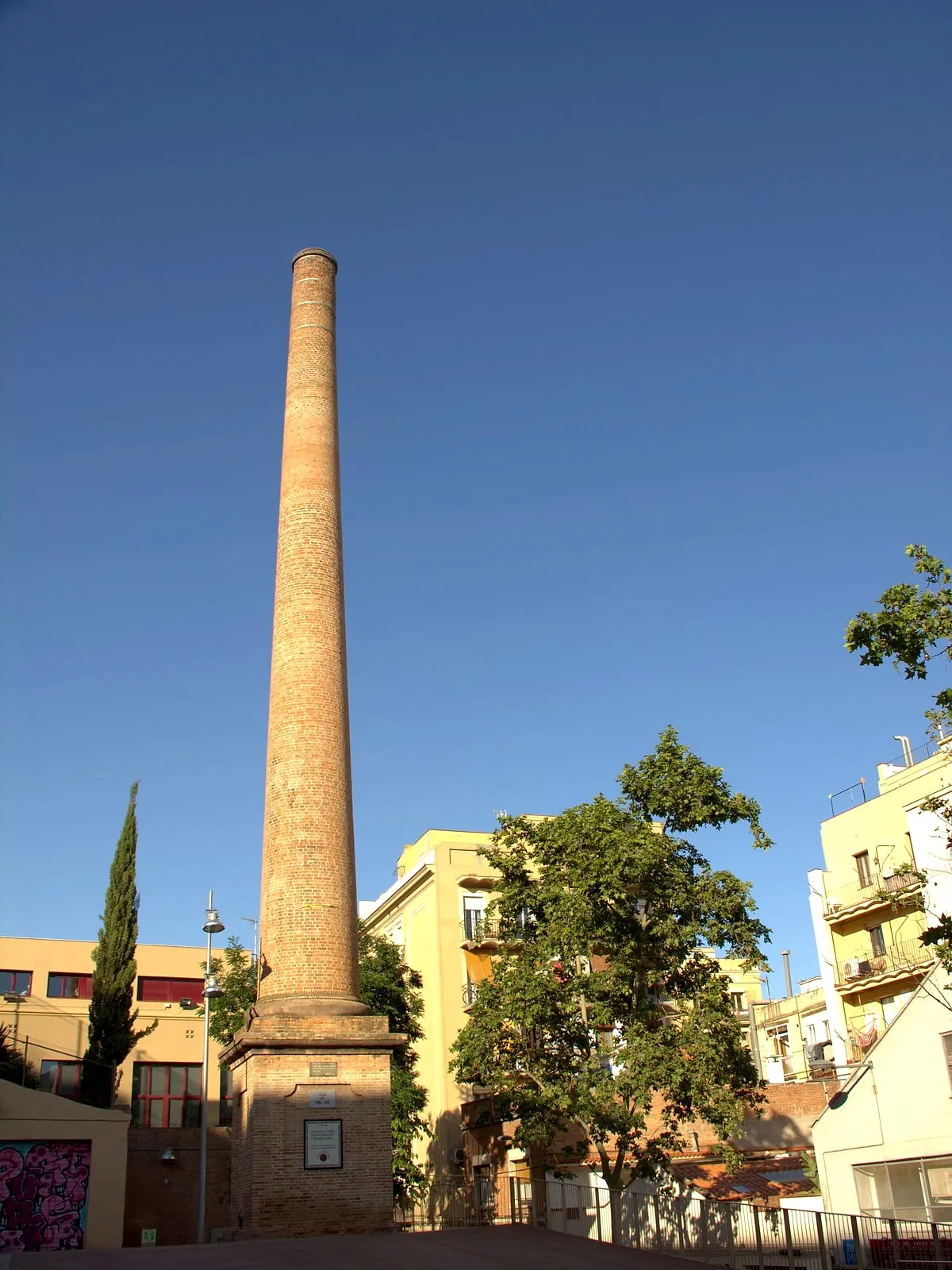
Gràcia has a second century-old market, the Mercat de l’Abaceria Central. It began as an open-air market in Plaça de la Revolució and moved into a building in 1892, put up by J. Torras at the initiative of an industrialist named Puig Martí — the same name as the street, and the same industrial Gràcia of which the city’s heritage catalogue records exactly one surviving chimney. Seventy-three stalls under a roof. It only passed into municipal hands in 1913, and it was rebuilt in 1965.
In January 2019 the city began dismantling it. Only the metal structure was kept, because that structure is heritage-catalogued. Since 11 July 2019 the market has been trading from a temporary installation on Passeig de Sant Joan, between carrer Indústria and Sant Antoni Maria Claret — which is not in Gràcia.
So if you have read somewhere that Gràcia has two markets and you set off for the second one, you will arrive at a works site. Go to the Llibertat.
Why a market is the best fifteen minutes in this neighbourhood
Because Gràcia’s whole argument is that it is a place rather than a sight, and a market is the fastest available proof. Nothing in it is for you. Nobody is performing. The prices are the prices.
It also connects directly to the two things visitors most want from this neighbourhood and most often get wrong. What is worth eating and when is in eating in Gràcia; the one ritual with a fixed hour on it is the vermouth, and a tin bought in the market is exactly what goes with it.
The walk
Our Gràcia walking tour goes past the market on the way between the tower in Plaça de la Vila and the old factory streets, with an actor for a guide. Three hours, ten people, ending in a celler.
The market is free, though, and open to anybody, and it does not need us at all. Whether the neighbourhood as a whole earns your half day is argued, with the case against included, in is Gràcia worth visiting.
The other one, four years younger, has not been in its own building since 2019 — and digging the site turned up the mill it was built on: the Abaceria. The attribution argument above is a small piece of a bigger one, which is how a man with no architect’s qualification built half of modernista Gràcia.
Where this comes from
- Mercat de la LlibertatAjuntament de Barcelona · Institut Municipal de MercatsThat the land belonged to Marc Olives, who in 1831 arranged for houses and a wide square to be built there and farmers immediately set up to sell; that the current building opened in 1888 to a design by Miquel Pasqual i Tintorer, 'arquitecte municipal de la Vila de Gràcia'; that the modernista decoration is by Francesc Berenguer i Mestres, 'amic i admirador de Gaudí'; the iron roof with glazed black and reddish ceramic; a surface of 1,728 m²; and a remodelling completed in 2009.
- Miquel Pascual i TintorerGran Enciclopèdia CatalanaThat Pascual i Tintorer (1849-1916) was municipal architect of Gràcia among other towns, drew the topographic plan of Gràcia and built its town hall, and that his works include 'el mercat de la Llibertat de Gràcia (1888)'. It adds, as a general statement about his career rather than about this building, 'Tingué com a col·laborador Francesc Berenguer i Mestres'.
- Mercat de la Llibertat — arquitecturacatalana.catCol·legi d'Arquitectes de CatalunyaThe architects' association record, which credits the market to Francesc d'Assís Berenguer i Mestres alone, dates it 1893, lists it as BCIL, and gives no reasoning; and its biography of Berenguer, which records that he never obtained the architect's qualification and that his projects are commonly found signed by others, Miquel Pascual among them.
- Construcció del mercat de la Llibertat (fons Ajuntament de Gràcia, sig. 1888 502)Arxiu Municipal de Barcelona · Arxiu Municipal del Districte de GràciaThe file for the market's construction, 1888-1898, in the fonds of the Ajuntament de Gràcia: the commission of the project to the municipal architect, the budget, the minutes of the council sessions, the auction held in Madrid, the distribution of the stalls, and a third part awarding the canopies around the market. Its description records plans signed by the municipal architect and does not mention Berenguer.
- Mercat de l'Abaceria CentralAjuntament de Barcelona · Institut Municipal de MercatsThat it began as an open-air market in Plaça de la Revolució and moved to its site in 1892; that it was built by J. Torras at the initiative of an industrialist named Puig Martí with seventy-three covered stalls; that it only became municipal in 1913; that it was rebuilt in 1965; that dismantling began in January 2019 leaving only the heritage-catalogued metal structure; and that it has been in a provisional installation on Passeig de Sant Joan since 11 July 2019.
- Gràcia (barri de Barcelona)Gran Enciclopèdia CatalanaThat the first market of Gràcia was established at the plaça de la Llibertat, and that the town grew around the squares of Trilla, Llibertat and Sol.
Everything above that carries a date, a figure or a name is checked against these before it is published. Where we could not find a source, the page says so.
Quick answers
- What is the Mercat de la Llibertat?
- The covered market of Gràcia, and the oldest one in the neighbourhood. The city dates the current building to 1888, built to a design by Miquel Pascual i Tintorer — the city spells it Pasqual — who was the municipal architect of the town of Gràcia — this was a town commissioning its own market hall, nine years before Barcelona annexed it.
- Who designed it?
- The city and the encyclopedia both credit Miquel Pascual i Tintorer, municipal architect of Gràcia, with the 1888 building. The city also credits the modernista decoration to Francesc Berenguer i Mestres. The architects' association credits the whole thing to Berenguer alone and dates it 1893, and the municipal archive file for its construction names only the municipal architect. The disagreement is real and this page sets it out rather than picking one.
- Is it worth going into if I am not shopping?
- Yes, for about fifteen minutes, and it is free. It is the fastest way to establish that Gràcia is a neighbourhood where people do their shopping rather than a set, and it is a genuine piece of nineteenth-century iron architecture that costs nothing to walk into.
- Where is the other Gràcia market?
- Not where you think. The Mercat de l'Abaceria Central, which began as an open-air market in Plaça de la Revolució and moved into a building in 1892, has been in a temporary installation on Passeig de Sant Joan since 11 July 2019 while its own site is rebuilt. Only the catalogued metal structure of the original was kept.
- Is it a food hall for tourists?
- No, and that is the point of going. There are bars inside and you can eat, but the market exists for the people who live around it, which is a different atmosphere from a market whose customers are all holding phones.
The tours this piece is about
More in the journal
Gràcia
- Why the streets of Gràcia are like that: two roads, four streams and a convent
- Gràcia has thirty passatges and only three of them are in Gràcia
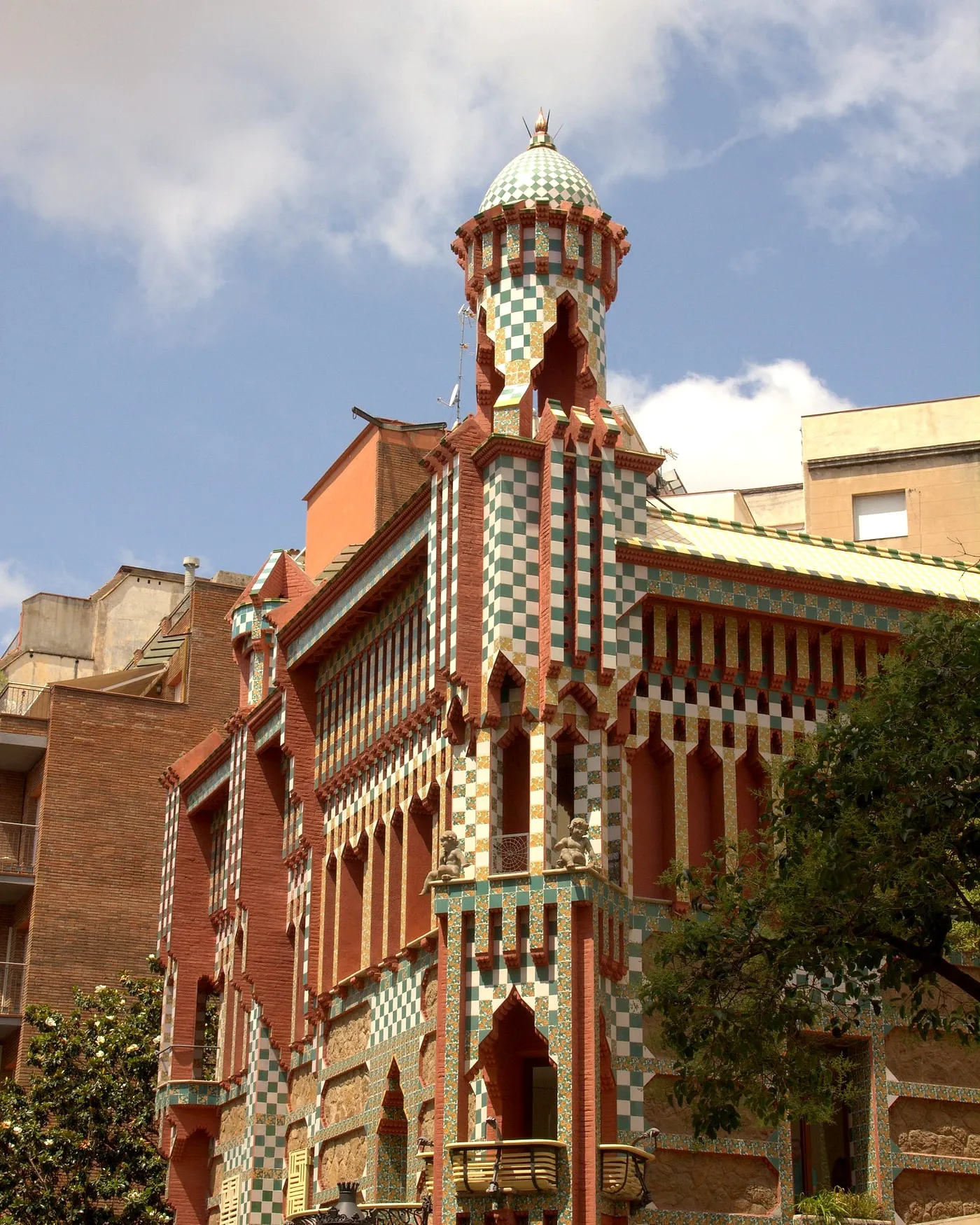
- The man who built modernista Gràcia was not allowed to sign it, and the city's catalogue names who did
- Gràcia has a Liberty street and a Fraternity street, and the jewels are a silversmith's sales pitch
- The Abaceria: a market that has been in a marquee since 2019, and the cotton mill they found underneath it
- What is left of industrial Gràcia is one chimney, and we had been saying several